
The most dramatic negotiations in the history of Finland’s government borrowing took place in October 1867. “I have no such enemy in this world that I would wish upon them what I have been forced to endure in Berlin during these eight days,” wrote Reinhold Frenckell, who represented Finland in the negotiations. What was going on?
The tense talks were held in Berlin in October 1867, only a few years after the Grand Duchy of Finland had issued its first foreign bonds. Finland was represented by Reinhold Frenckell, a member of the Board of the Bank of Finland, while on the opposite side sat one of Europe’s most influential bankers, Mayer Carl von Rothschild.
The dramatic negotiations were caused by one of the most tragic events in Finnish history. The autonomous Grand Duchy of the Russian Empire, a poor and agricultural frontier of Western Europe, suffered several years of famine throughout the 1860s. A true disaster struck in 1867: there was still snow on the ground in June, and frost arrived at the beginning of September. Crops were lost, resulting in the last peacetime famine in Western Europe, during which up to ten per cent of the Finnish population perished.
The Finnish Senate was in desperate need of money to alleviate the effects of the famine.
The Finnish Senate was in desperate need of money to alleviate the effects of the famine. Von Rothschild doubted Finland’s ability to repay its debts, as the country was poor and ravaged by the hunger years. However, he finally agreed to grant the loan to the Imperial Finnish Senate. Frenckell had put everything on the line during the loan negotiations and even managed to impress von Rothschild. In fact, after deciding to grant the loan, von Rothschild wrote to Finland to the head of the department for financial affairs in the Senate, J.W. Snellman: “I do not know how I could impress upon you strongly enough, senator Snellman, that your government’s representative has proven himself to be a passionate advocate of his country’s interests. Without a doubt, you have his tenacity and the measures he used to persuade me to thank for the decision we have reached regarding this transaction, as I would certainly not have given my consent to anyone but him.”
This kind of praise from the leading banker in Germany can, for a good reason, be considered as an important and exceptional demonstration of competence. Perhaps it contributed to the appointment of Reinhold Frenckell as the Director General of a new central agency, the State Treasury, less than ten years later. The agency began its operation 150 years ago in 1876, and it was tasked with the management of state funds, the payment of interests, and amortisation of central government debt. Since then, the duties of the State Treasury have expanded significantly. However, it is still responsible for the payment transactions of central government debt, and now also for the market operations related to central government borrowing and cash management within the strategic guidelines laid down by the Ministry of Finance.
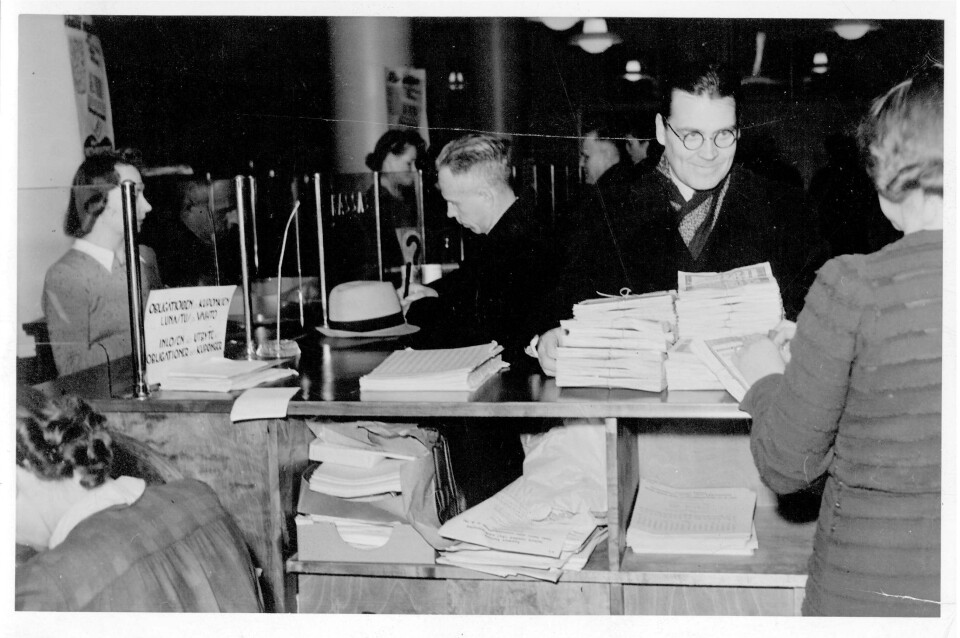
Redemption of government bonds in the State Treasury Hall after the Second World War. Photo: State Treasury
In the late 19th century, an even more important development for government borrowing than the founding of the State Treasury was the establishment of a borrowing infrastructure. After the difficult beginning of the 1860s, Finland became part of a global banking network and obtained an international investor base. At the same time, Finland became a well-known player in the international financial market. The roots of the current borrowing practices and banking relationships of the Finnish government go back 150 years.
The roots of the Finnish government’s banking relationships go back 150 years.
Banking and investor relations enabled the practical execution of government borrowing. However, the investment decisions were based on the state of Finland’s national economy and general government finances, which culminated in the credit risk premium: the difference of interest rates between the Finnish government bonds and bonds issued by other countries. Tracking this development provides an interesting insight into the history of Finland. Ultimately, the credit risk premium reflects the confidence that the investors place in the borrower’s ability and willingness to service the debt in accordance with the loan terms.
Towards the end of the 19th century, the credit risk of the Grand Duchy of Finland fell much lower than that of Russia. It settled at the level of the Nordic countries as Finland’s autonomy expanded and its economic growth gained momentum. Unlike in most of the great powers of the age of imperialism, the border land was perceived by the capital markets as a more reliable issuer than the core of the empire. Finland’s strong market credentials were linked to the integration of the global financial markets, as the classic gold-standard system brought the world’s financial markets together into a single large system.
The tragic twentieth century, with its World Wars, destroyed the international financial system, which did not recover to the level of integration seen in the belle époque era until the turn of the millennium. These international developments were also reflected on Finland. The young republic had gained its independence in 1917, and now it was struggling in the turbulent environment of the global economy and politics. Furthermore, especially in the early stages of its independence, Finland was suffering from an existential threat posed by the Soviet Union, which kept the credit risk premium for Finland high. In fact, Finland’s full return to the core of the bond market took place only in 1999 along with the introduction of the euro market.
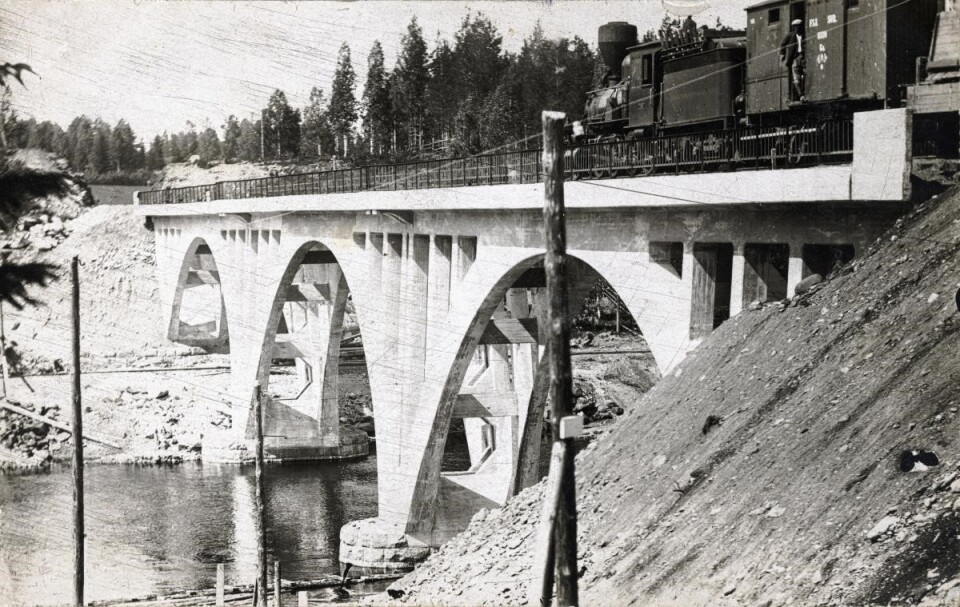
Government borrowing played a key role in financing the construction of Finland’s nationwide railway network. The photo shows the Jänisjoki railway bridge, completed in 1921. Photo: Labour Archives
Finland used the proceeds from the bonds arranged first by Mayer Carl von Rotshchild in Germany and, later at the turn of the century, by Crédit Lyonnais in Paris to build a nationwide railway network. The significance of the railway network in the Finnish history was crucial: the railway system connected the country into a single economic and political entity. The issuing of government bonds also emphasised the statehood of autonomous Finland, as did the name of the new agency, the State Treasury. In the 1920s, independent Finland issued bonds in New York to fund the electrification of the country. During the Second World War, domestic retail borrowing was a key instrument in the financing of warfare: in addition to bank branches, war bonds could be registered at the State Treasury.
The importance of government borrowing was again highlighted during the recession of the 1990s: the central government leaned on domestic and foreign borrowing to alleviate the effects of the great depression and to support the banking sector that was in crisis. Finland has always managed to gradually reduce its elevated debt levels, until the chronic budget deficits following the 2008 financial crisis appear to have caused a more permanent rise in the debt ratio. This is also reflected in the annual borrowing requirements of the central government. In its 150th anniversary year, the State Treasury will issue debt securities worth EUR 44 billion, mainly to foreign investors.